
Criminal Court Records in Jackson County
A criminal court record is the file maintained by the court and clerk after a prosecutor files a criminal case. It is narrower than every law-enforcement record connected to an incident, but broader than a single charge entry. In Jackson County, the court record can include the charging information, probable-cause materials when public, initial hearing entries, bond information, appearances, motions, plea agreements, trial settings, disposition, sentencing order, fines, costs, probation terms, and no-contact orders.
Jackson County's official court structure makes the court assignment important. Jackson Circuit Court handles felony cases, most felony matters, and operating while intoxicated cases. Jackson Superior Court I handles Class A, B, and C misdemeanors other than OWI. Superior Court II handles juvenile delinquency and related juvenile matters, but Indiana juvenile records are confidential except where law allows access, so those matters should not be treated like ordinary public misdemeanor files.
Indiana's criminal-law source is assigned to this page. Source: Indiana Code Title 35.
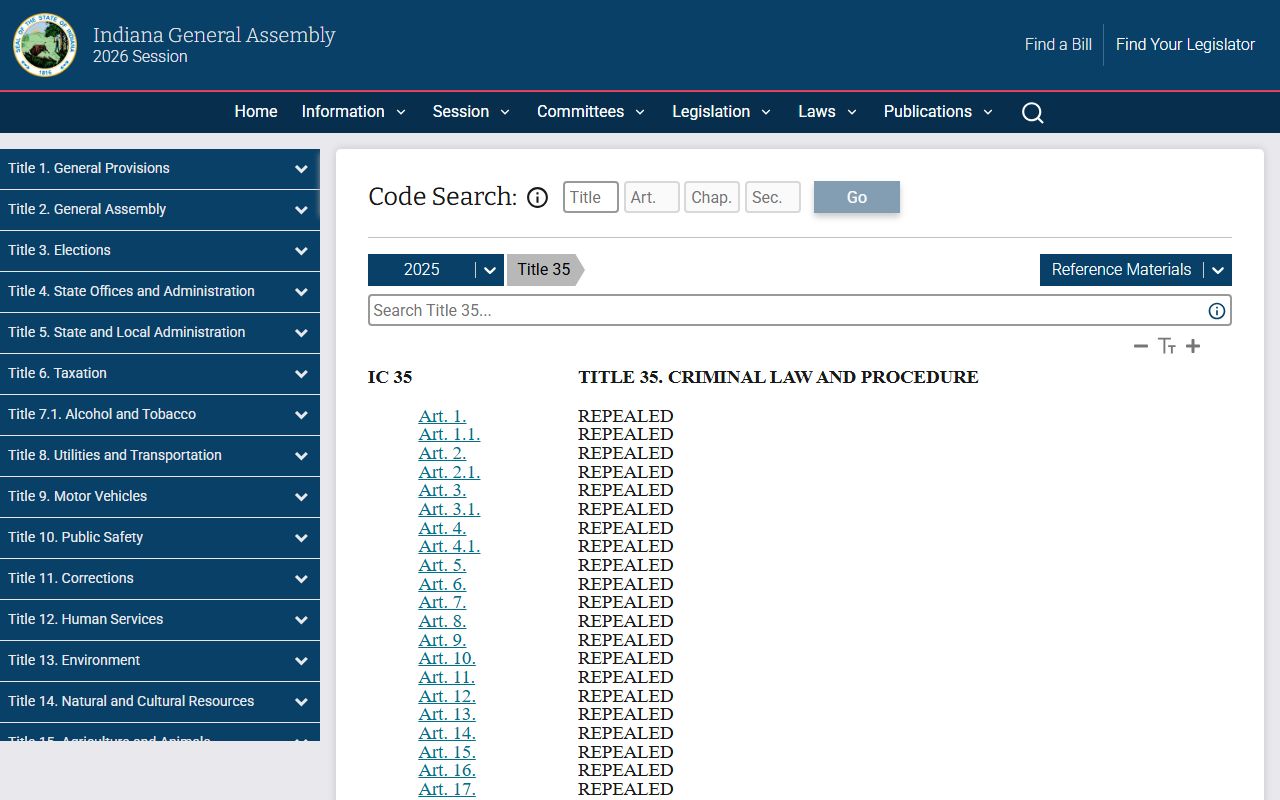
Title 35 is relevant to criminal court records because it includes Indiana criminal-law and criminal-procedure provisions, including expungement references.
How to Search Jackson County Criminal Court Records
Search public criminal court cases through Indiana MyCase. Use a case number if known, or search by defendant name and then narrow by court, case type, status, or filing date. For Jackson County, felony and OWI records should be checked against Circuit Court assignment, while most misdemeanor records should be checked against Superior Court I. If the record relates to a charge immediately after arrest rather than the full case history, the related arrest records and charges page is the better match.
- Open MyCase and choose search by case, party, attorney, citation, or cross-reference number.
- For a defendant-name search, enter last name and add first name, middle name, date of birth, court, case type, or file-date range to reduce unrelated results.
- Confirm the court assignment: Circuit Court for felony and OWI, Superior Court I for most misdemeanors.
- Open the case and read the chronological case summary for charges, hearing dates, bond, motions, plea entries, disposition, sentencing, and financial entries.
- Contact the Jackson County Clerk of the Circuit Court for certified copies, missing documents, official balances, or older files not available online.
The prosecutor's office is another key criminal-court source. Source: Jackson County Prosecutor's Office.
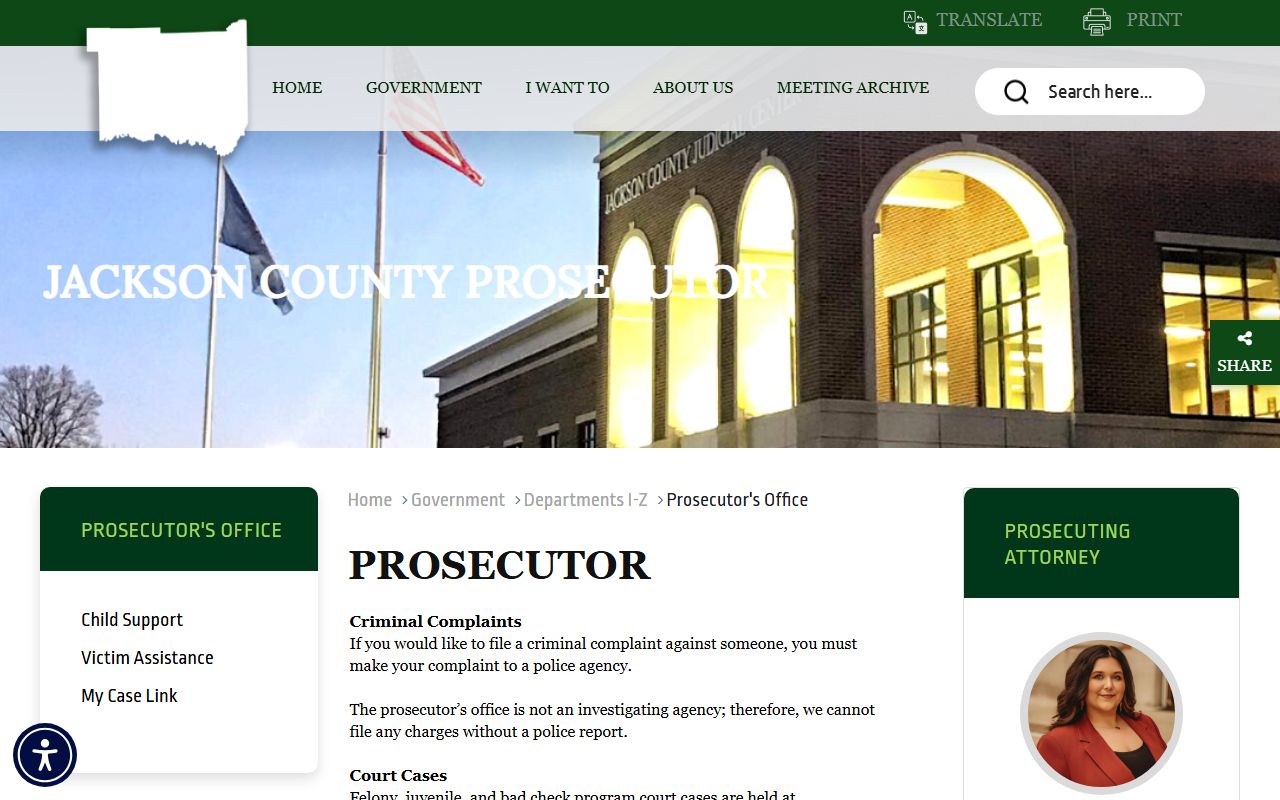
The prosecutor page matters because criminal charges, plea discussions, restitution, and sentencing information often appear in the court record after prosecutor filings or agreements.
Stages of a Criminal Case
A Jackson County criminal case moves through court in stages, and the docket records those stages as events. The exact labels vary by case, but the record usually begins when charges are filed and continues through hearing settings, motions, plea or trial activity, disposition, and sentencing if there is a conviction. Bond and no-contact information may appear early. Restitution, probation, fines, costs, and payment entries may appear after disposition.
Case flow: Charges Filed › Initial Hearing › Pretrial / Motions › Plea or Trial › Disposition › Sentencing
| Stage | What Happens |
|---|---|
| Charges Filed | The prosecutor files charging information in the appropriate court; felony and OWI matters route to Circuit Court, while most misdemeanors route to Superior Court I. |
| Initial Hearing | The court addresses rights, the filed charges, counsel, bond, future appearances, and related early orders. |
| Pretrial / Motions | Parties file requests, responses, discovery-related entries, continuances, and orders before plea or trial. |
| Plea or Trial | The case may resolve by plea agreement, bench or jury trial, dismissal, or other court action. |
| Disposition | The docket records the outcome, such as dismissed, guilty, not guilty, or judgment entered. |
| Sentencing | After conviction, the record can show jail or prison terms, probation, fines, costs, restitution, no-contact terms, or other conditions. |
What a Jackson County Criminal Court Record Shows
Criminal case records use the same basic MyCase structure as other public court records, but the content is criminal-case specific. A file can include the State as prosecuting party, the defendant, attorneys, charging information, case type, court, judge, bond, hearings, motions, plea entries, judgment, sentence, financial obligations, and no-contact orders. The public docket can also show whether a charge was amended, dismissed, resolved by plea, taken to trial, or followed by probation or restitution.
| Field | What It Shows |
|---|---|
| Case Number | Indiana uniform case number identifying county, court, filing date, criminal case type, and sequence. |
| Defendant | The person charged in the criminal case; DOB may narrow search but is not displayed in public case details. |
| Charges | The offense allegations filed by the prosecutor, including charge level and later amendments when reflected in the docket. |
| Bond | Release amount, bond condition, recognizance entry, surety activity, or related order when posted publicly. |
| Plea | Guilty, not guilty, plea agreement, or related plea proceeding entries. |
| Disposition | The case or charge outcome, such as dismissed, guilty, not guilty, acquittal, or judgment entered. |
| Sentence | Jail, prison, probation, fines, court costs, restitution, no-contact provisions, and related terms after conviction. |
Charges vs. Convictions
A charge is an accusation filed in court. A conviction is an adjudication of guilt, usually through a guilty plea, judgment, or verdict. A criminal court record may contain charges that were amended, dismissed, resolved by plea to a different offense, or ended in acquittal. That distinction is important when reading Jackson County criminal court records because a person may appear in a case file without every original charge becoming a conviction.
| Charge | Conviction | |
|---|---|---|
| Stage | Filed accusation by the prosecutor. | Final guilty outcome by plea, verdict, or judgment. |
| Record Location | Charging information and docket entries. | Disposition, judgment, sentencing order, and financial entries. |
| Possible Outcomes | Amended, dismissed, tried, or resolved by plea. | Sentence, probation, fines, costs, restitution, or no-contact terms may follow. |
Prosecutor, Victim Assistance, and Case Notices
Indiana uses the title Prosecuting Attorney, not district attorney. The Jackson County Prosecuting Attorney identified in the research is Lynsey N. Fleetwood, with phone (812) 358-6130. The prosecutor page notes that misdemeanor and traffic court cases are held at Superior Court I, 109 S Sugar Street, Suite 220, Brownstown. The office is relevant to criminal records because the prosecutor files charges, appears for the State, negotiates pleas, addresses restitution, and participates in sentencing proceedings.
Victim Assistance contact information in the research lists Kelly Lawson at (812) 358-6149 and klawson@jcprosecutor.us. Victim Assistance topics include community service referrals, juvenile offenders, no-contact orders, plea agreements, restitution, SAVIN notification of inmate incarceration, sentencing, trial process, Turning Point Domestic Violence Services, and violent crime compensation. Those topics can appear as docket entries, orders, notices, or sentencing conditions, but victim-service records themselves are not the same thing as the public criminal court case file.
The assigned victim-assistance image supports this section. Source: Jackson County Prosecutor Victim Assistance.
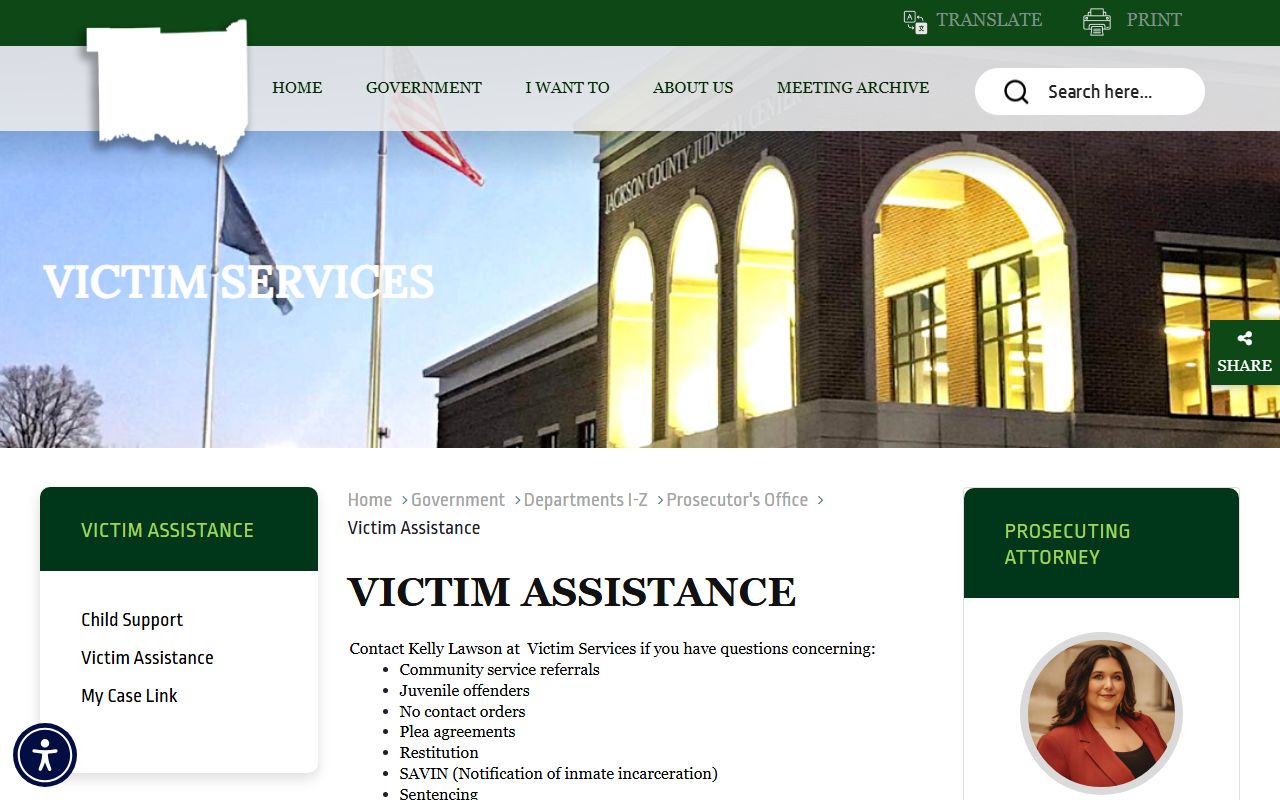
Victim-assistance information helps explain why no-contact orders, restitution, sentencing, and notification entries may appear in or around a criminal case record.
Public Access to Criminal Court Records
Public access to Jackson County criminal court records comes from Indiana court access rules and general public-records law. Indiana Administrative Rule 9 states the court records that are publicly accessible are available at the courthouse during regular business hours and electronically when allowed. The Indiana Access to Public Records Act, IC 5-14-3, supports inspection and copying of public agency records, but criminal case files also follow Indiana Supreme Court rules and case-specific court orders.
Key Statutes:
IC 5-14-3 - Indiana's general public-records law for public agency records, subject to exceptions.
IC 35-38-9 - Indiana's expungement chapter for eligible arrest, charge, and conviction records.
MyCase public access can show final orders and judgments in criminal cases and non-confidential documents in some miscellaneous criminal matters. If a document is not online, the official copy channel is the local clerk. The Jackson County Clerk of the Circuit Court is at 109 S Sugar Street, Suite 130, Brownstown, IN 47220, with phone (812) 358-6118 and Monday through Friday hours of 8:00 a.m. to 4:30 p.m.
Sealed and Expunged Criminal Records
Not every criminal case appears in a public search. MyCase help says public cases that are not confidential, sealed, or expunged can be searched. Indiana Rules on Access to Court Records allow records to be excluded from public access by sealing or an order excluding records from public access. Indiana's expungement chapter, IC 35-38-9, governs requests to remove or limit public access to eligible arrest, charge, and conviction records.
| Sealed | Expunged | |
|---|---|---|
| Visibility | Excluded from public access under an order or rule. | Public access changes depending on the expungement type and court order. |
| Where Filed | Usually in the court handling the record. | Filed in the court that handled the criminal case. |
| Local Step | Confirm case number and local filing path with the clerk or court. | Use IC 35-38-9 and any available court or clerk forms; eligibility depends on the statute. |
A person seeking expungement should not assume a granted order destroys every copy. The statute and the court's order control what courts, agencies, and the public can see. If a case still appears online after expungement, Indiana Judicial Branch guidance points users to learn more or contact the local court.
Public Defender and Defense Records
The Jackson County Public Defender's Office consists of attorneys appointed by the courts and provided by the state to represent and advise people who cannot afford private counsel. The official county page lists the office at 111 S Main Street, Suite 226, Brownstown, IN 47220, phone (812) 358-1850. It should not be treated as a general legal-aid office or a public-advice counter for non-clients.
Defense filings can appear in the court docket as appearances, motions, continuances, plea-related entries, trial settings, or sentencing matters. Attorney-client materials and defense strategy are not public simply because a criminal case exists. Public access is limited to what the court record makes available under Indiana access rules and case-specific orders.
Related Criminal Record Channels
Criminal court records should not be confused with jail custody or unrelated county records. Jail custody status belongs with the sheriff, jail roster, INjail, IDOC, SAVIN, or VINE depending on custody type. A person can have a criminal court case without currently being in jail, and a person can be in jail before the full court record has reached disposition. For current custody, use Jackson County inmate records and jail-specific channels rather than relying only on the court docket.
The Recorder FAQ is assigned to this page because it helps distinguish court files from non-court county records. Source: Jackson County Recorder frequently asked questions.
The recorder source reinforces a practical boundary: deeds, liens, mortgages, and recorded instruments are public records, but they are not the criminal court case file maintained by the clerk.